
When we lifted anchor in San Evaristo, the sea was calm and the morning air still cool. Our plan was to make a short hop first to Punta Cazadero, a rocky point on Isla San José where whales and dolphins can be spotted in the channel. The dramatic cliffs and rugged shoreline here are a reminder of how raw and untouched this stretch of the Sea of Cortez can feel. It’s not the most protected anchorage, but it makes for a scenic pause on the way north.

From there, we originally planned to cross back to the Baja side and anchor in Los Gatos. The anchorage is well-known for its striking red sandstone formations that glow brilliantly at sunrise and sunset. Many cruisers speak fondly of snorkeling and exploring the sculpted rocks. But Los Gatos hasn’t felt as secure recently. This past Saturday (February 25th), four aggressive men reportedly tried to board a sailboat anchored there, and the story made the rounds in the cruising community. With that incident fresh in our minds, we decided to skip Los Gatos this time and head straight for Agua Verde.
The run north is a longer day, but the reward is worth it. Agua Verde is one of the gems of this coast, often described as a must-stop anchorage. True to its name, the water here shimmers in deep shades of turquoise, ringed by dramatic mountains that tumble down into the bay.
The anchorage itself has several pockets to tuck into depending on wind direction, with both north and south coves offering protection. Ashore, a small fishing village dots the shoreline, complete with a tienda for basic provisions and a little restaurant where you might find fresh goat cheese or a cold beer.
Unlike the stark beauty of some of the more remote anchorages, Agua Verde feels alive—pelicans dive for fish, kids paddle by in pangas, and the village dogs greet you at the beach. After the long stretch from San Evaristo, it was the perfect place to rest, swim, and soak in the rhythm of Baja life.
A swell rolled into the anchorage our second night in Agua Verde. So after one of our worst nights at anchor we left Agua Verde looking for a calm water.
We pointed the bow north toward Isla Carmen, one of the largest islands in the Loreto Bay National Marine Park. The trip was a gentle run, with calm seas and just enough breeze to keep us moving along comfortably. Our first stop was Punta Colorado on the southeast corner of Carmen.
Punta Colorado gets its name from the dramatic red sandstone cliffs that frame the anchorage. The holding is generally good in sand, and the tall cliffs give excellent protection from the prevailing north winds. Just two miles north of here lie a set of striking caves, carved into the soft volcanic tuff and sandstone that make up much of the island. Over centuries, wind, waves, and rain have eroded the rock, creating caverns and arches that glow with warm colors in the late afternoon light. They’re accessible by dinghy or kayak when conditions are calm, and exploring them up close gives you a real sense of the island’s geologic story.
From Punta Colorado we continued around to Bahia Salinas on the eastern side of Isla Carmen. Bahia Salinas is one of the largest anchorages on the island, famous for its wide sandy beach and the remnants of an old salt mining operation. Rusting machinery, abandoned buildings, and a long pier stand as reminders of the island’s past industry. These days, the bay is better known for its turquoise water and opportunities to explore both onshore and underwater. A large shipwreck rests in the bay as well, its skeletal remains still visible above the waterline, a dramatic reminder of the hazards of the Sea of Cortez.
But Bahia Salinas isn’t entirely abandoned. While the salt works are long silent, the island still sees activity from a private hunting lodge that caters to clients seeking the desert bighorn sheep that roam the rugged mountains of Isla Carmen. The lodge and its operations are privately managed, and while cruisers aren’t generally affected by it, it’s a curious juxtaposition: a wild anchorage filled with reminders of both history and modern enterprise.
It’s important to remember that Isla Carmen, like the rest of this region, lies within the Loreto Bay National Marine Park. Established in 1996, the park protects over 500 square miles of islands, coastline, and sea between Isla Coronados in the north and Agua Verde in the south. The park is a UNESCO World Heritage site and is home to dolphins, sea lions, whales, and countless species of fish. With its protected status comes responsibility: spearfishing is strictly prohibited, and other forms of fishing are regulated by permit. Visitors are asked to respect the rules so that the marine life and fragile ecosystems here remain healthy for generations to come.
Sailing these waters feels like being inside a living natural museum—rugged cliffs, ancient caves, abundant sea life, and the echoes of history in places like Bahia Salinas. From the quiet of Agua Verde to the red rock beauty of Punta Colorado and the vast beach at Salinas, this stretch of the Sea of Cortez is as rich in stories as it is in scenery.
Leaving Bahia Salinas on Isla Carmen, we set a course northwest toward Isla Coronados, supposedly a very easy anchorage in the Loreto area. The morning started calm, with a steady breeze filling the sails, but the highlight of the passage came mid-channel.
Our depth sounder suddenly showed shallow water, despite the charts indicating nearly 100 feet below us. For a moment, we wondered if something was wrong with the instrument. Then we spotted the telltale spouts — whales passing directly beneath us. It was both exhilarating and slightly eerie to imagine such massive creatures swimming right under the keel.
As if whales weren’t enough excitement, just as we were sailing into the anchorage a yellowtail jack hit one of our handlines. After a lively fight, we brought it aboard and had dinner plans sorted. With the hook set in Coronados’ south anchorage, we settled into the cockpit, plates of fresh yellowtail on our laps, as dolphins cruised around the anchorage for hours. It was one of those rare, perfect days at sea that remind us why we love this lifestyle.
We spent the night at Coronados, the volcanic cone of the island looming above us, and in the early morning light motored south in flat calm seas to Loreto.
Loreto is a charming town with plenty of services, though it isn’t set up for yachts in the same way as La Paz. There’s no marina for sailboats, only a panga harbor, but you can anchor just off the malecón and use the dinghy dock for a small fee.
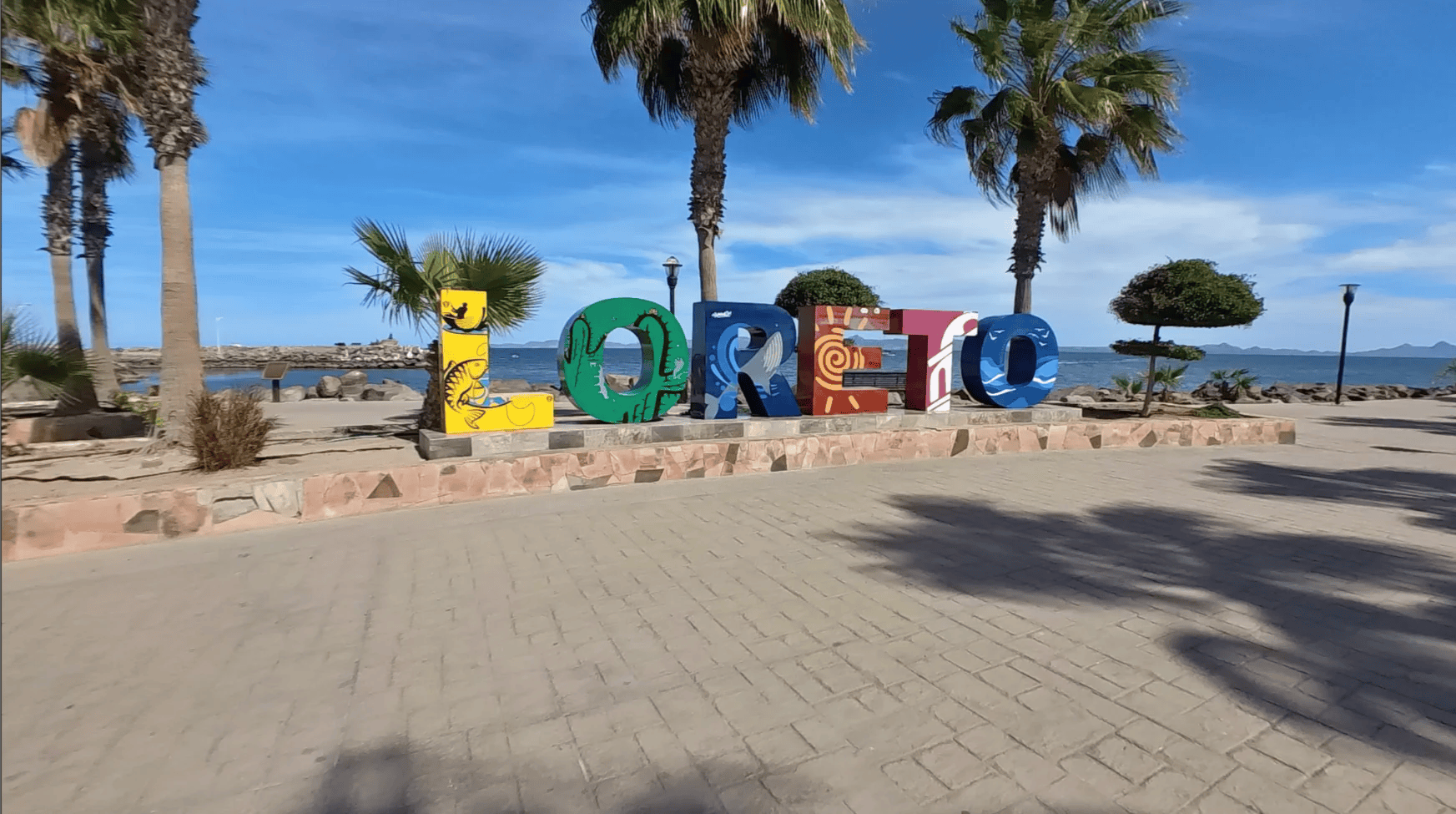
From there, we spent a full day tackling chores: dropping off laundry, visiting three different grocery stores to properly provision, and topping up fuel. By the end of the day we were worn out, but ready for the next leg north.
Founded in 1697, Loreto holds the distinction of being the first Spanish settlement in Baja California and the site of the first Jesuit mission in the Californias: Misión de Nuestra Señora de Loreto Conchó. For over a century, Loreto served as the capital of the Californias until the seat was moved to La Paz in 1777.
Despite hurricanes and hardships, the town never disappeared and today it’s a small but vibrant hub with a rich cultural legacy. The historic mission church still stands in the heart of town, and the nearby museum showcases artifacts from the early missionary period. Loreto is also central to the surrounding Loreto Bay National Marine Park, which protects the islands and marine life that sailors like us get to enjoy today.
At sunrise the following morning, sails went up and we pointed the bow toward San Juanico, continuing our journey along this stunning stretch of the Sea of Cortez.


