
After the hectic rescue in San Francisquito, we were ready for some peace and quiet. We raised anchor and sailed north toward El Pescador, a spot we’d heard about from a few other cruisers who described it as wild, remote and beautiful. The day turned out to be one of those dream passages—steady wind on the beam, calm seas, and that perfect rhythm that makes sailing feel effortless.
As we approached the anchorage, the skies began to darken. Moments after dropping the hook, the heavens opened up and we were treated to a rare Baja rain shower. It felt cleansing after the adrenaline of the past week. To the north, the volcano on Isla Smith (also known as Isla Coronado) loomed dramatically, and a swirling cloud formation made it look as if it were erupting with steam.
We ended up spending twelve glorious days completely alone in El Pescador—no other boats, no voices, just us and the sound of the sea. During our stay, we witnessed two unforgettable events: our very first SpaceX launch streaking across the sky, and the 2024 solar eclipse, both from the cockpit of our little floating home. It was pure magic.
Rich spent hours in the water, spearfishing along the north reef where the grouper are plentiful. We explored a small islet nearby that serves as a nesting site for seagulls—dozens of them wheeling and calling overhead. Onshore, we found the remnants of an abandoned resort tucked behind the beach. The palapa-style buildings were surprisingly intact, with stone floors decorated with beautiful pictograms of dolphins and turtles still visible through the dust. It was eerie and enchanting all at once.
After two tranquil weeks, we finally weighed anchor and motored the eight miles north to the little village of Bahía de Los Ángeles. There’s no marina or harbor, so we anchored off the beach and took the dinghy to shore in search of fresh fruits and vegetables. The town had everything we needed and a laid-back charm that made it easy to linger.
After restocking in Bahía de Los Ángeles, we set our sights on Isla La Ventana, just a short motor north. The entrance looked straightforward enough on the chart, but as we approached, we realized it was anything but. Large rocks—some visible above the surface, others lurking just below—dotted the narrow passage. We picked our way through carefully, following the light and shadows in the water until we finally dropped anchor in a small pocket of calm. Once again, we were completely alone.
The cruising guide mentioned that La Ventana was not a good anchorage for westerly winds, though a few reviews claimed that it could handle up to 20 knots with no problem. The forecast called for exactly that—20 knots from the west—so we figured we’d be fine. What a mistake.
Around 1 a.m., our anchor alarm shrieked us awake. We shot out of bed to find that we were dragging—fast—and far too close to shore for comfort. When we’d anchored earlier, we had a gentle east breeze, and when the wind clocked around from the west, the anchor never properly reset. And it wasn’t 20 knots—it was blowing a solid 35.
Still half-asleep and in our jammies, we fired up the engine and scrambled to get out of there. The night was pitch black, and the only lights we could see were from the village at Bahía de Los Ángeles, which made everything even more confusing. I clung to the navigation screen, following the old track we’d used to enter, inching our way back out through the rocks.
To make matters worse, our dinghy was side-tied out of the water on the starboard side. In the howling wind and steep chop, it was swinging dangerously and threatening to hit the spreaders on the mast. Rich went forward—getting completely soaked in the process—and managed to secure it as best he could. Once we cleared the channel, we motored directly into the wind and waves, aiming for the lee of the mountains on the Baja shore.
Finally, in the shelter of the coast, the wind dropped to a manageable 12 knots. We kept motoring north to the anchorage at La Gringa, dropped the hook, and collapsed into bed, still in our damp pajamas but utterly relieved to be safe.
The next morning, the sun was shining and the sea was calm, as if nothing had happened. We stayed in La Gringa another night to regroup, dry everything out, and nurse our wounded pride. No real damage—just a solid reminder that even after all our time cruising, the Sea of Cortez still has plenty of lessons to teach.

Two days after our rough night in La Ventana, we decided to move on. From La Gringa, we headed to the well-known Don Juan anchorage—a place cruisers often call the ultimate “hurricane hole” thanks to its complete protection from every direction. It seemed like the perfect spot to rest, regroup, and shake off the nerves from our midnight escape.
The wind was blowing about 15 knots that morning, and the sea state was messy and confused. Waves came at us from every angle, and it was hard to get any rhythm. But the moment we turned into the narrow channel that leads into Don Juan, it was as if someone had flipped a switch. The water went perfectly still—smooth as glass—and the wind dropped to a whisper. It felt like sailing into another world.
There were about six other boats already anchored inside, their reflections mirrored perfectly on the calm surface. We found a spot and dropped the hook, instantly at peace. Over the next several days, we hiked across the low hills to “the Pond” and the Quemado anchorage, both beautiful in their own quiet way. Rich went spearfishing again, and we started to feel like ourselves after the chaos of La Ventana.
Of course, no Baja anchorage is perfect, and Don Juan has its own challenge—bees. The Baja bees are relentless in their search for fresh water. Every time we rinsed off our wetsuits after diving, within minutes the boat would be buzzing with visitors. Thankfully, they’re not aggressive; they just want a drink. As soon as the sun set, they’d vanish as suddenly as they appeared.
By the time we left Don Juan, our confidence had mostly returned. The Sea of Cortez had reminded us once again how quickly conditions can change—and how humbling it can be when they do. But it also rewarded us with calm anchorages, glassy water, and quiet nights under endless stars. That’s the rhythm of cruising life: moments of chaos balanced by long stretches of peace. And for all its lessons, we wouldn’t trade it for anything.
After several calm and restorative days in Don Juan, we once again pointed the bow north—this time toward the legendary anchorage of Refugio at the northern tip of Isla Ángel de la Guarda. We’d heard glowing reports from other cruisers: multiple protected anchorages, wild and untouched landscapes, incredible diving, and a resident sea lion colony. It sounded like the perfect finale to our season in the upper Sea of Cortez.
As we approached Vela Rock—also known as Sail Rock for its striking, triangular shape—the first sign that things might not go as planned appeared in the form of tiny, buzzing companions. The bobo flies. At first, there were just a few. Then a few more. By the time we were abeam of the rock (which, incidentally, is caked in bird guano), they had become a full-on cloud.
We hoped the swarm would thin out once we slipped through the narrow, shallow channel into the east anchorage at Refugio. It didn’t. The moment we dropped anchor, we were surrounded. The bobos covered every surface—our arms, our faces, the dodger, even the deck. They don’t bite, and they don’t sting, but they swarm in relentless, tickling clouds that make it impossible to relax outside. Within minutes, we were hiding down below, fans running full blast just to keep them at bay.
Despite the siege, we stayed two days. On the second, Rich went diving and came back grinning, hauling his biggest grouper yet. The underwater world lived up to Refugio’s reputation—crystal clear, teeming with life, and absolutely wild. But the surface was another story. The bobos won.
At dawn on the third morning, we made our escape. Even as we motored away, they clung to us—stubborn little hitchhikers who finally gave up hours later as we made our way south down the east side of Isla Ángel de la Guarda. We passed Pulpito Rock, a massive black monolith guarding the northern end of a wide bight, and finally dropped anchor in Caleta Pulpito West.
Our plan had been to linger in Refugio for several weeks, waiting for a good weather window to continue north to Puerto Peñasco for haul-out. But, as we’ve learned time and again, the Sea of Cortez and Mother Nature often have their own ideas. And sometimes, their changes of plan lead you exactly where you’re meant to be.
Looking back on this stretch of our journey—from the peaceful days in El Pescador to the wild chaos of La Ventana, the calm refuge of Don Juan, and finally the short-lived adventure in Refugio—it feels like we experienced the full spectrum of the wild north Sea of Cortez. The moments of magic, the humbling lessons, the surprises that come with each new anchorage.
Cruising life has a way of testing your limits and then rewarding you tenfold. One night you’re in your pajamas, wrestling anchors in the dark and second-guessing everything you thought you knew. The next, you’re floating in glassy water under a sky full of stars, feeling like the luckiest people in the world. The Sea keeps us honest—it reminds us that we’re guests here, and that even when things don’t go to plan, there’s beauty in the unpredictability.
By the time we left Refugio, tired, salty, and still brushing off the last of the bobos, we couldn’t help but laugh. We didn’t end up where we thought we would, and yet it felt right. Every anchorage had given us something—calm, challenge, renewal, perspective. That’s the rhythm of sailing: constant motion, endless learning, and an ever-growing appreciation for both the serenity and the storms.
And as always, the Sea of Cortez kept its promise—never dull, always humbling, and unfailingly beautiful.
Sailing the east side of Isla Ángel de la Guarda felt a bit like venturing into the wild north and uncharted territory. The cruising guides had little to no information about this stretch of coastline, and our Navionics charts weren’t much help either — the depths were off by a lot. So, as we made our way toward Caleta Pulpito West, we were sailing a little blind and trusting our eyes more than our screens.
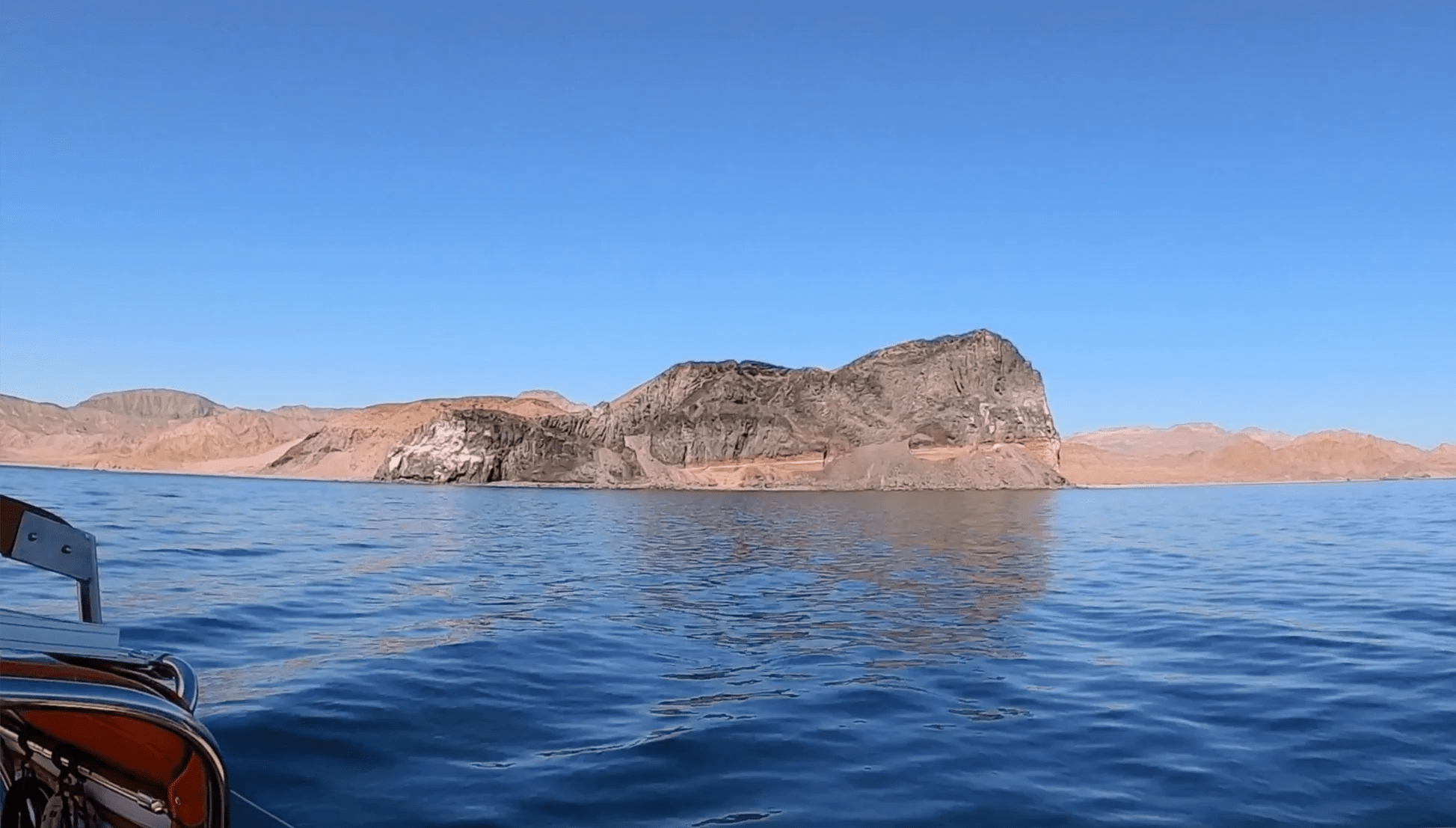
Once we found a patch of sandy bottom in about 15 feet of crystal-clear water, we dropped the hook and took in the view. The water here was incredibly clear — easily the clearest we’ve seen anywhere in the Sea of Cortez. Below us, the rock formations looked like a diver’s dream, full of caves and crevices that screamed “fish habitat.”
Rich wasted no time getting in the water. The visibility was unreal, and the underwater world didn’t disappoint. Later he came back grinning with a couple of nice groupers and a story about a yellowtail that got away.
We went ashore to explore and found a wide beach backed by low sand dunes and a small lagoon tucked just behind them. A handful of gulls were nesting along the upper beach, making sure we knew which parts were their territory. It was a wild, beautiful, and completely untouched place.
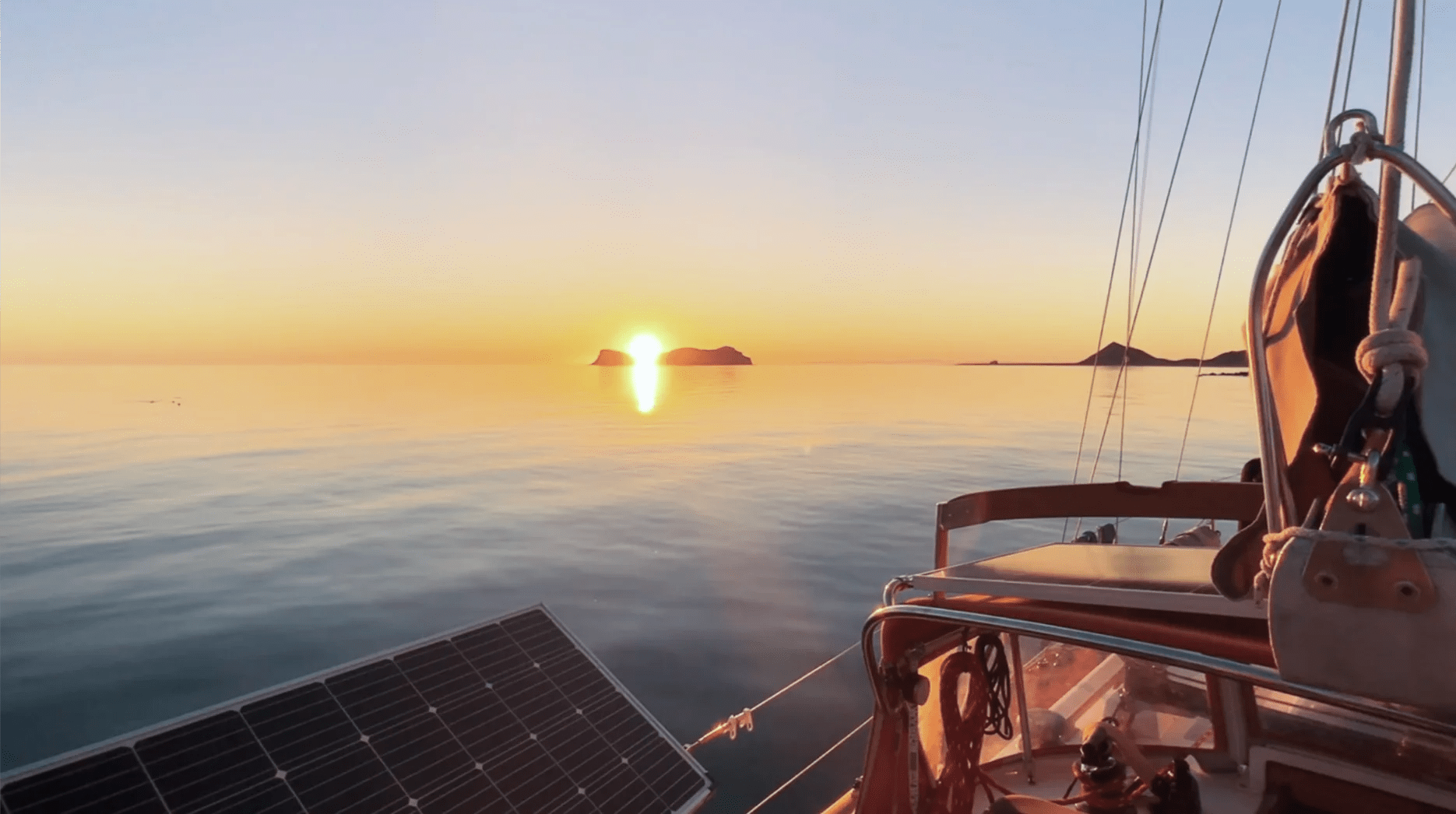
That night, the wind stayed light from the west, giving us perfect protection from any swell. It was one of those peaceful anchorages that remind you why you put up with the rolly ones.
After two days soaking up Caleta Pulpito West, we decided to keep exploring. We headed south along the east coast to an anchorage called Tiny Cove at the southern tip of the island. True to its name, it was small — just big enough for us — and we spent one quiet night there before continuing on to Isla Salsipuedes.
“Salsipuedes” translates roughly to “Leave if you can,” a name that fits both the island’s rugged cliffs and, as we learned, its less-than-welcoming residents: bobo flies.
As we approached, the bobos descended in full force. Rich went forward to drop the anchor, but before it even hit the bottom, he was hauling it back up. The swarm was so thick we couldn’t even stand on deck. We made a quick escape, motoring away while the persistent little flies followed us for hours.

Eventually, we pointed the bow south and let the wind decide our fate. The breeze filled in nicely, pushing us toward San Francisquito. By late afternoon, we dropped anchor in calm, golden light with pelicans gliding all around us.
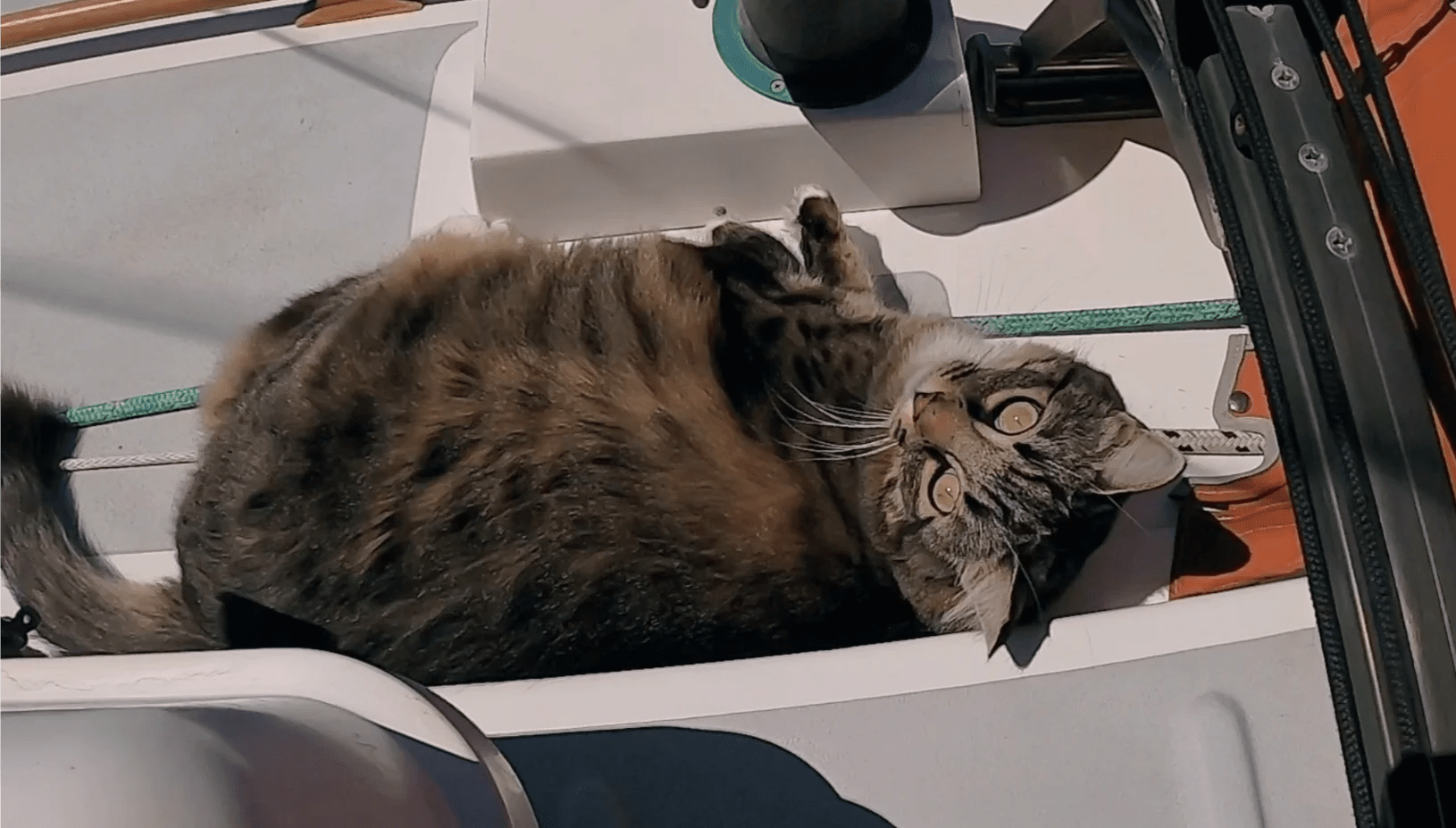
Our cat, Twitchell, was not a fan of the pelican visitors. She perched on deck, tail twitching, growling and spitting every time one floated too close. After a while, the pelicans lost interest and drifted away, leaving Twitchell victorious and us ready to relax after another wild stretch of Sea of Cortez exploring.
After fleeing the relentless bobo flies at Salsipuedes, we pointed the bow south and made for San Francisquito. The last time we were here, the weather kept us from diving — and we ended up spending most of our time helping a fellow cruiser who’d broken his ankle. This time, the conditions were perfect, and we were determined to finally see what lay beneath the surface.
We started by exploring around the north point of the bay. Rich slipped into the water with his spear gun, hoping to find snapper or yellowtail. He didn’t spot either, but he did come across several small horn sharks and rays gliding through the sand channels.

Later, we moved to the outside of the south point, where the current was absolutely ripping. I stayed in the dinghy, keeping an eye on Rich as he drifted with the flow, searching for that elusive yellowtail. He drifted a long way before climbing back aboard to reset for another pass. On the second drift, he finally struck gold — a 22-pound yellowtail.
Back aboard the boat, we celebrated properly. Hamachi (yellowtail sashimi) is one of our absolute favorites, and we feasted like kings that night.
The next morning, we continued our trip south toward Santa Rosalia. Every single forecast model called for 12 to 15 knots from the NNW. In reality? Nearly zero wind. Typical Sea of Cortez — the models rarely seem to get it right. So instead of a beautiful sail, we motored most of the way, planning to stop for the night at Punta Trinidad, about halfway down.
Just as we approached the anchorage, though — only two miles out — the wind suddenly blasted in from the west. We went from glassy calm to 25 knots in an instant. The anchorage looked way too unsettled to spend the night, so we reefed down, turned away from shore, and decided to push on to Santa Rosalia.
At least we finally got some decent sailing! For several hours, we cruised under reefed sails before arriving at Santa Rosalia around 9 p.m., in pitch darkness. Thankfully, we still had an old GPS track from our previous visit, which guided us safely into the harbor. There were a few anchored boats to dodge, but we dropped the hook without issue and collapsed into bed.
The next morning, we moved into a slip at the marina — and were met by our friend Steve Wall, who we’d met on our last visit. Not long after, we heard that Pat and Lisa from SV Solmate were also heading this way. It looked like the gang was getting back together! We spent the next week in Santa Rosalia catching up, swapping stories, and playing games at our favorite local spot, Padre Santo Brew Pub, right by the marina.
After a week on the dock, it was time to move on again. We sailed to Isla San Marcos for a few peaceful nights, then continued to Punta Chivato for a quick stop. A new friend, Dennis from SV Counting Stars, had reached out to us via the No Foreign Land app after seeing we were nearby. He and his partner Rosario invited us to join them, so we changed our plans to meet up.
We enjoyed a beautiful evening in the anchorage — a mellow sunset dinghy float with the other cruisers, good conversation, and calm seas. Early the next morning, we were up and heading south once again, this time bound for Bahía Concepción.
The forecast promised 15 knots from the north, and sure enough, by the time we left it was blowing a steady 10. We unfurled the jib and started sailing down the bay — and soon it piped up to over 20 knots. We were flying at 6 knots, spray everywhere, the seas getting rougher as we went.
We sailed all the way down to Santispac, where we dropped the hook next to our friends on SV Remedy and SV Beluga — a perfect ending to another wild and wonderful leg down the Sea of Cortez.


