
San Juanico, tucked along the Baja coastline in the Sea of Cortez, is one of those anchorages that seems to have it all—turquoise water, dramatic geology, great hiking, and for those who like to get in the water, some of the best spearfishing around.

After dropping the hook in the main anchorage, we couldn’t resist slipping into the water with our gear. The visibility was excellent, and before long, we spotted a few dogtooth snapper cruising the reef edges. These powerful fish are a thrill to hunt—smart, strong, and absolutely delicious. We landed one nice snapper, which would later become a series of very satisfying fish sandwiches.
When we weren’t in the water, we explored the rugged hills surrounding the bay. The geology here is striking—bands of white gypsum slice through the ochre cliffs, glittering in the sun like veins of marble. It’s easy to see why San Juanico is a favorite among cruisers and photographers alike.
One morning, we hiked over the hill to the north beach, known as La Ramada, where the landscape opens up to wide sandy stretches and sweeping views of the sea and Punta Pulpito to the north. La Ramada has good protection from southerly winds that blow during the spring and summer months. The trail winds through cactus and desert scrub, and every step reveals another angle of this wild, layered coastline.
After a few peaceful days, we weighed anchor and continued north, stopping overnight at Medano Blanco, a quiet, remote beach with soft sand and calm water. From there, we carried on to Santispac, the northernmost anchorage down in Bahia Concepción. By then, both of us were fighting off colds, so the next four days were spent doing very little—just resting, reading, and making those dogtooth snapper sandwiches. Sometimes cruising life is like that: bursts of adventure followed by stretches of stillness.
Once we started feeling better, we took the dinghy out for a long ride around the bay, checking out the other anchorages scattered along Bahia Concepción’s shoreline. The water shimmered in shades of teal and blue, and pelicans glided by as if to remind us that life doesn’t need to move fast here.
After four quiet nights—on Rich’s birthday, no less—we pulled up anchor again and pointed the bow toward Punta Chivato, ready for whatever awaited us next up the coast.
One striking anecdote: according to that same article, Jayne Mansfield was married there in a private ceremony.
Over time the property changed names and ownership; at one point it was re-branded as “Hotel Punta Chivato” and more recently is referred to as Posada de las Flores Punta Chivato.
In the FBI-document referenced article, the mysterious figure Andy Lococo (a restaurant/club owner in the U.S. with alleged gambling/racketeering ties) is said to have tried to purchase the resort outright for US $650,000.
His reported intention: to turn the hotel into a casino or gambling-venue “away from the regulations he faced in the States.” The FBI informant said his offer was rejected “because of his hoodlum and gambling background.”
After the proposal failed, Lococo reportedly bought property across the street from the hotel in Punta Chivato intending to build something similar. That may never have fully materialized.
The hotel has long been abandoned (since 2014 or so). Our Sea of Cortez cruising guide (2007) suggests stopping at the hotel for a margarita.
The listing for Posada de las Flores shows it as a functioning resort with 20 rooms, pool, beachfront and amenities.
It’s a unique landmark: an isolated resort built by plane, in mid-century style, in a remote Baja anchorage.
The airstrip and hotel silhouette make it a good landmark for anchoring in the bay and remembering your approach into Punta Chivato.
The ghost-hotel vibe adds character—perfect for a dinghy walk ashore, and some photo exploring.
The mob/casino interest piece adds intrigue: remote resorts in Baja often have these layers of “big plans that fizzled,” which gives them a storytelling depth beyond just anchorages and beaches.
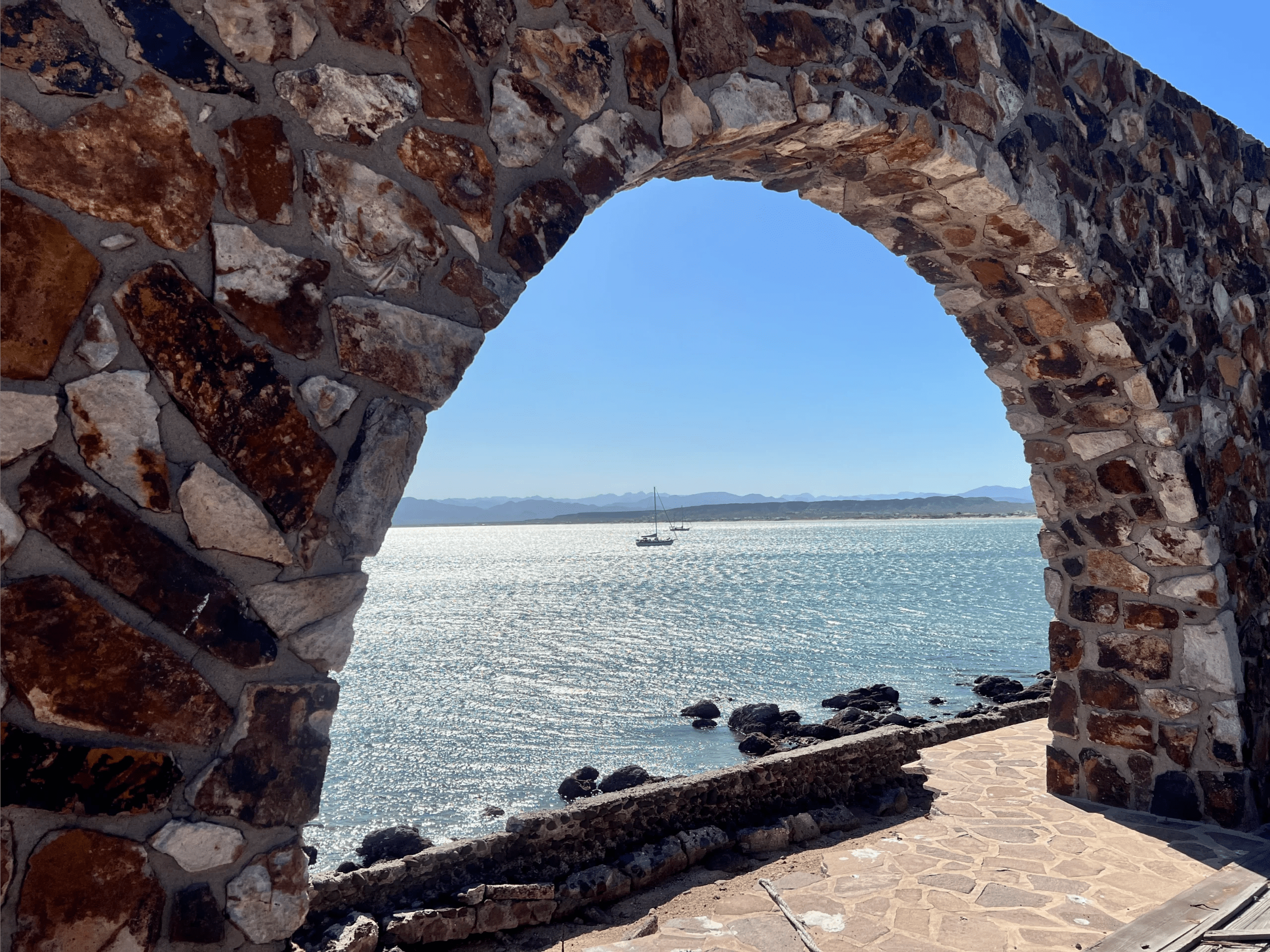
Punta Chivato has a quiet kind of magic—long sandy beaches, turquoise water that looks painted on, and the haunting silhouette of a once-grand hotel standing watch over the shoreline. We dropped anchor just off the beach and spent a few days exploring both the coastline and the nearby village.
One of the first things we did was walk up to the abandoned Posada de las Flores. Nestled on the remote peninsula of Punta Chivato in the Sea of Cortez, the hotel was originally known as Hotel Borrego de Oro (literally “Golden Sheep/Goat”) and is part of cruising lore—and appears to have a colorful back-story worthy of anchoring notes.
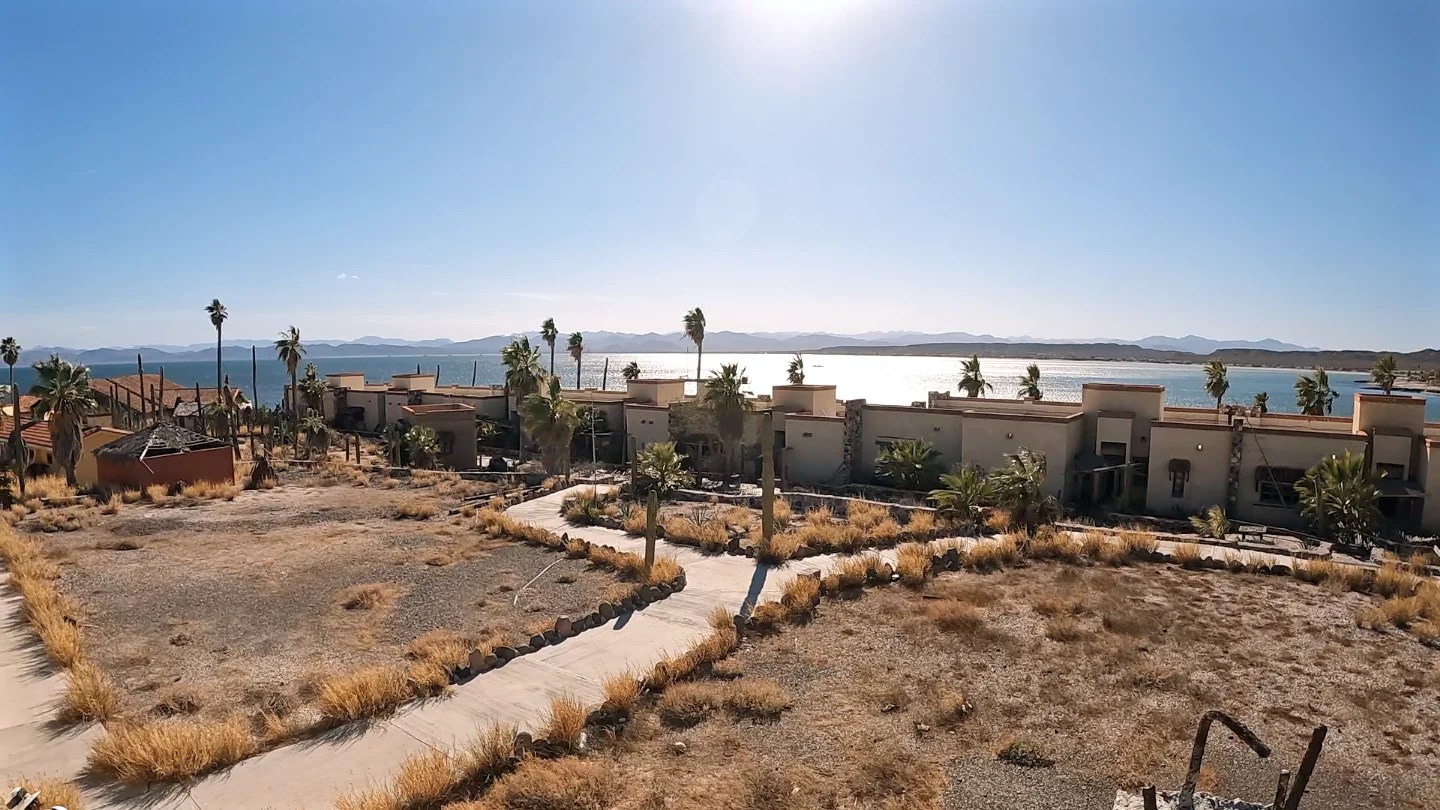
According to a retrospective article, the hotel was built in the mid-1960s and originally called Hotel Borrego de Oro.
It was designed as a fly-in, upscale resort: it reportedly had two landing strips (air-strip access) and was aimed at guests arriving by plane.
The article notes that during that era (sometimes called the “Golden Age of Baja”), celebrities such as John Wayne and Bing Crosby used the resort as a getaway.
The hotel was part of a grand vision to turn Punta Chivato into a high-end destination, complete with an airstrip, villas, and manicured gardens. For a time, it thrived—its terracotta towers gleaming against the blue of the Sea of Cortez. But as tourism patterns shifted and maintenance costs grew, the property was eventually abandoned. Today it stands frozen in time—arched windows framing views of the sea, tiled floors cracked by years of sun and salt. Wandering through it felt like exploring a forgotten movie set, beautiful and melancholy all at once.
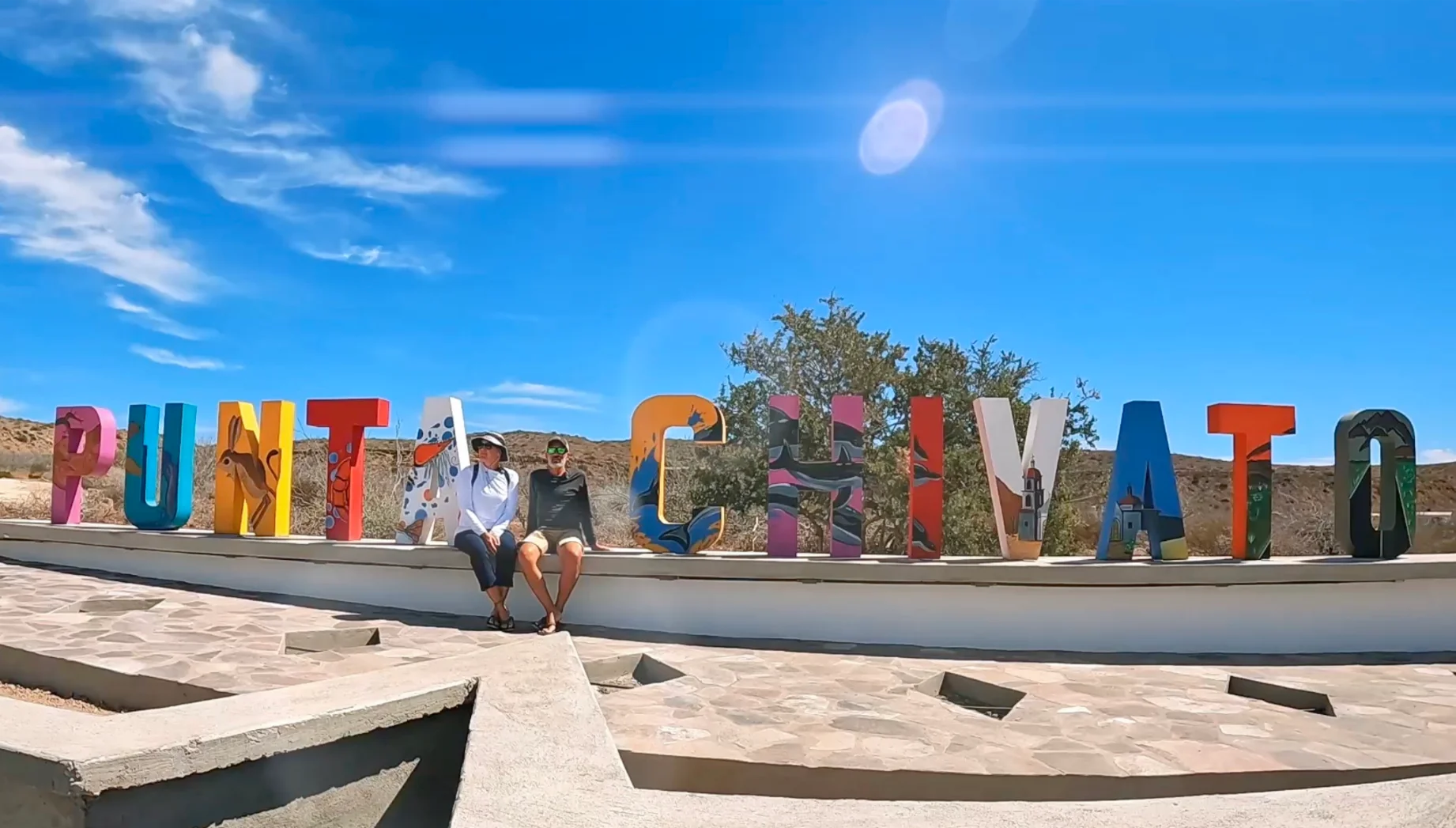
We also strolled through the village of Punta Chivato, where friendly locals waved as we passed by. Breakfast at Doña Julia’s was a highlight—fresh tortillas, eggs, and coffee served with a smile. From there, we walked over to El Hotel, the newer restaurant, bar, and hotel near the Punta Chivato sign. It’s become the social heart of the area, with a breezy patio and views out to the water—perfect for a cold drink and conversation with other travelers.
A few days later, with the sea glassy calm, we decided to motor over to Mulegé, about ten miles southwest. Along the way, we had the best kind of company—a pod of dolphins that joined us for nearly half an hour, weaving through the bow wake and surfacing so close we could hear their exhalations.
We anchored just outside the Mulegé River and took the dinghy upstream into town. The river is lined with palms and small fishing boats, and it feels like entering another world after the open sea. We beached the dinghy under the highway bridge, explored the town, picked up a few groceries and some gasoline, then headed back before the tide dropped too low. By late afternoon we were back aboard, anchor up, and returning to Punta Chivato for one last quiet night.
The next morning, we pointed the bow north toward Santa Rosalía, a town with a character all its own. Founded in the late 19th century as a French copper-mining settlement, Santa Rosalía still carries that heritage in its architecture—wooden buildings, narrow streets, and the famous Iglesia de Santa Bárbara, designed by Gustave Eiffel himself. The town’s waterfront hums with fishing boats and ferries, and after the solitude of Punta Chivato, it felt lively and full of history.
From abandoned hotels to dolphin encounters and river towns, this stretch of the Sea of Cortez reminded us why we love cruising here—the unexpected mix of wild beauty, local flavor, and stories layered into every shoreline.
Leaving Santa Rosalia felt bittersweet. We’d spent several days there tied up at the marina, soaking in the quirky charm of the town, making new friends, and — maybe most memorably — finding good beer for the first time in ages. There’s a new brew pub right on the marina called Padre Santo, and for anyone who’s spent time sailing the Sea of Cortez, you know how rare it is to find a cold microbrew that isn’t mass-produced. After months of Tecate and Pacifico, that first pint of Padre Santo IPA was pure heaven.

Over tacos and beer, Rich and I started talking about whether we’d keep making YouTube videos. Honestly, we’ve been a bit burned out. Filming everything, editing for hours, trying to keep up with algorithms — it can really take the fun out of sailing. Our time in Santa Rosalia, just living and not recording every moment, reminded us why we started cruising in the first place. We don’t have the answer yet, but we’re thinking hard about finding a better balance between sharing and being present.
That night, we left Santa Rosalia around 6 p.m., planning to sail through the night to San Francisquito, about 75 miles north. Just after sunset, the sea came alive — a huge pod of dolphins joined us, hundreds of them gliding alongside the bow in the fading light. Some were small and sleek, and for a moment we wondered if they might be vaquitas.
The vaquita is the world’s rarest marine mammal — a tiny porpoise found only in the northern Gulf of California. Sadly, fewer than ten are believed to remain, victims of illegal gillnets used for fishing totoaba (white sea bass). The chances of seeing one are astronomically small, but it’s nice to imagine that maybe, just maybe, a few of them are still out there, thriving where few boats venture.

We arrived at San Francisquito mid-morning, dropped anchor, and after a nap, launched the dinghy to go fishing. It was calm and beautiful, but the real drama began after sunset.
The forecast had called for big winds — 35 to 40 knots on Saturday night and into Easter morning — so we followed our usual routine: getting the dinghy back on deck in case we had to move in a hurry. Around 3 p.m., I was sitting in the cockpit when I heard a strange noise — almost like a bird or maybe kids on the beach. An hour later, I heard it again. This time, I spotted a woman waving frantically from a 68-foot Nordhavn anchored nearby.
We’d seen this yacht in a few anchorages before, but never met the owners. I yelled for her to turn on her VHF, but she couldn’t figure it out. Rich and I dropped the dinghy — which takes about 20 minutes — and went over. The woman, Tracy, told us her husband, Jeff, had gone for a walk at 11 a.m. and hadn’t returned. It was now 4:30.
We helped her get the VHF running and then headed for shore with our handheld radio to search. On the beach, we found his dinghy swamped and half sunk — not a good sign. We hiked inland calling his name, and after about 20 minutes we finally heard him calling back. He was more than a mile from the beach, with a badly broken ankle.
Rich headed back to get help while I stayed with Jeff. Eventually Rich returned with another cruiser, and together the three of us spent hours carrying Jeff down the rocky hillside in the dark. We’d splinted his ankle as best we could, but it was a long, painful process. When we finally reached the beach, I sprinted to fetch our dinghy — only to find it completely swamped from the rising tide.
After a frantic few minutes bailing it out, Rich joined me, and together we got the motor started. We loaded Jeff in and brought him back to his yacht, to Tracy’s enormous relief. They called for an emergency evacuation, and around 2 a.m. on Easter Sunday, the Mexican Navy arrived to take Jeff back to Santa Rosalia. From there, he was driven to Loreto and later flown to Cabo San Lucas, where he underwent surgery to repair his ankle.
Meanwhile, Tracy stayed aboard, alone and unsure how to operate the Nordhavn. After a few anxious hours, she managed to find a captain willing to make the long trip to remote San Francisquito to bring the yacht south.

The next day, Rich and I went ashore to recover Jeff’s swamped dinghy. It had been buried in the sand and full of water, but we managed to dig it out and even got the motor started. When we brought it back to Tracy, she was overjoyed — she’d written it off as lost. She hugged us, gave us two bottles of champagne, and kept asking how she could possibly repay us.
By Monday, the winds had eased, and we lifted anchor once again, continuing north — tired, grateful, and maybe a little humbled.
Cruising the Sea of Cortez has a way of throwing everything at you — breathtaking wildlife, unexpected friendships, and moments that remind you why community out here matters so much. Sometimes it’s not about the videos or the views. It’s about being there when someone needs help — and knowing that someday, someone might do the same for you.


